Maybe it’s been a foolish endeavor, and maybe I’m the only one who misses the blog ol’ days, but I’ve been giving it a shot. I’ve been working on restoring some of the old content, though much of it was lost. I’ve slowly been rebuilding the old remix sunday archives, and even posting the occasional new edition. And I’ve been writing again.
You can find all the label’s releases here, on bandcamp, or most anywhere you listen to music these days. I’ve still got copies of some of the old vinyl releases, and I recently released the first in a set of charitable cassette compilations to raise awareness about the continued [mis]use of broken windows policing methods.
Plus, I put together a playlists section with a handful of spotify lists that hopefully start to capture a [slightly] updated version of the moods we used to peddle. Give those a listen and a ❤ if you would be so kind. If you want to get in touch, just give me a holler. Oh, and if you prefer to just start playing all the music on this page before reading any further, go ahead and click ▶︎
Merry Christmas to all who celebrate. I count myself really lucky that my whole family is wonderful, so holidays like this really do feel enriching. But for those of you who don’t have families, or for whom time with family is fraught, just remember that’s just the way it goes on days like this. Today, try to make the most of what you do have, and then spend tomorrow and next week thinking about what you’d like to build in the new year, either practically or emotionally.
Forward-thinking electro from Boorloo/Perth-based PTMC (real name Peter McAvan). “Infrared System” strikes a nice balance between clattering percussion and 30,000ft atmosphere. It’s the B-side of a new two-tracker he just released on Midnight Elevator, a label that’s worth paying attention to (it’s also run by PTMC). Midnight Elevator only started releasing in 2020 and seems exclusively focused on artists from the Boorloo area. Building community like that is always commendable and important, but it’s impressive that as a curator PTMC has nonetheless been able to keep the label’s stylistic range narrow enough to give it a distinct sound. I suggest checking out the rest of the catalog.
I’ve also included two tracks from PTMC’s last record, which came out on Midnight Elevator earlier in the year, also really worth checking.
Grab “Infrared System” on bandcamp, or stream it wherever you do your stream shopping.
Sultry 2-step from Melbourne’s re:abel (real name Ryan Gasparini). This is music to soundtrack the night you realize your heart is no longer broken. Music that says, fuck it, what do I have to lose?
I can’t concentrate today, so it’s helpful to have someone whispering in my ear insisting I do. This is from re:abel’s upcoming EP on Mammal Sounds.
No bandcamp for this, unfortunately, but it’s out now for streaming everywhere. Thankfully, re:abel was also kind enough to grant permission for me to host the mp3, for any DJs eager to play this out. Grab it below.
Bittersweet vapor twitch from LA-based yeong. On instagram, yeong described this as a ‘getting laid off from corporate america type beat.’ That explains why this is a little melancholy, but also has a vein of fuck y’all attitude running through it.
No bandcamp, unfortunately, but you can stream it on all the usual outlets.
omniboi is a Los Angeles-based producer and composer, originally from Arizona. He rose to some prominence in 2016-17 with a viral video in which he married a Migos acapella with Nintendo-jazz-chic chords, followed soon after by a string of notable singles and albums. He’s current with a new EP, Panorama, out now on Canadian powerhouse label and management group, Nettwerk.
After listening to a few songs from Panorama, it won’t be hard to gather that this is music heavily inspired by video game culture. But it’s not really 8-bit or chiptune. Instead, songs like “Ghost Town, USA” or “Marathon” feel distinctly 64-bit, and would fit right in on an N64 of Wii score. Music from that era of Nintendo games was deeply charming; these songs carry much of that charm because they’re so clearly the product of omniboi’s sincere love for that music.
Nevertheless, I’d say omni is strongest when approaching the less overtly video game-inspired fare on the record. The EP’s lead track “Set Apart” (featuring vocalist Dona) and “Omni-Vision” (featuring nelward) both temper the rubber and sodapop aesthetic that omni’s most comfortable in with a touch of red leather and champagne. Neither would be out of place in the context of a late aughts fluokids party in Paris where the DJ was playing nothing but French Touch and bloghaus. None of that is to say these are stuffy songs only for millennials either—they’re not—they just seem aimed at a broader audience. (I caught my two-year-old absent-mindedly shaking her stuff to “Set Apart,” and babies don’t lie, so that might also tell you something.)
Ultimately, Panorama is omniboi continuing to write the kind of music he loves, but there’s also evidence he might be eager to see his music working a few more dancefloors.
Panorama is out now. Grab it on bandcamp or stream it anywhere streams are sold.
omniboi – “Set Apart” ft. Dona (sc)
omniboi – “Marathon” (sc)
(Expand)
This review was written in support of the artist’s promotional campaign.
Yet another nice submission from Belgium here. Something is drawing my ear to music from Flanders lately. This time it’s from Brussels-based producer Danube. Like his namesake river, Danube’s latest string of singles all relate to major European cities from which he’s drawn inspiration. Though none of the other singles are named after cities actually in the river Danube’s path, the latest is. It’s an elegant cut of soulful cosmopolitan electronica that captures Vienna well.
No bandcamp for this, unfortunately, but you can find it on any major streaming outlet.
I mentioned the other day that I’ve been rediscovering my appreciation for a nice heavy-bassline-driven banger. Why be shy about it? I pride myself on avoiding pretentiousness where I can, and what’s wrong with rattling a few bones, anyway? This track I got in the inbox by Montreal-based borne fits that bill. The song is from borne’s latest EP, Deep End, out on Nightmode. The whole record is full of this sort of bass-heavy 2-step, so check out the rest if you like this one.
No bandcamp for this, unfortunately, but you can stream it wherever, and if you want to play this out, you’re going to have to go to a place like beatport, sorry.
Sometimes when I’m overwhelmed with work and my daughter wakes up with the umpteenth round of high fever or other daycare-related ailment, I just wish I could take a break and spend an evening on another planet. I’d be willing to settle for one of Jupiter’s moons too.
This innocent little lullaby from Kuwaiti a.MIDI is from their newest EP of songs that all imagine these sorts of quick calming vacations around the solar system.
Second time this week I’ve posted music from Belgium. I told you that country doesn’t get enough shine for its music.
This time it’s from JUICY, a pair of classically trained musicians making really compelling pop music and doing their best to subvert genre expectations. This song is from the recently released Cruelles Formes EP, produced in collaboration with equally talented countrymen ECHT!.
My French isn’t as sharp as it should be, and JUICY definitely embrace a certain lyrical expressionism and abstraction in some of their music, but I get the gist. I don’t have enough money either. Can someone explain to me what they might mean by: “rrrjrsfmr jrahtogpb” though?
No bandcamp for this, but you can stream it all over.
Bittersweet breakup melancholia from nomadic duo Sasha & the Bear. Definitely the kind of song one might listen to a few times after rowing all night. 💔
No bandcamp for Sasha & The Bear, but you can stream this wherever you do that.
Many people don’t think of Belgium as a place with a rich history of contributions to dance music. Some may only recall 2 Unlimited’s 1993 masterpiece “No Limit” or Technotronic’s classic “Pump Up The Jam”–both of which were extremely formative for me when I heard them as a little kid. Maybe others associate the country with groundbreakers like Soulwax/2manydjs, who are indeed Belgian and not French. The country is no doubt overlooked, despite the fact that Belgians have been raving since before raving was raving, and essentially birthed genres like EBM. But despite its significant contributions, Beligum’s proximity to its northern neighbors means its sound is generally associated with eurodance, gabber, and industrial influences.
For his new EP Echoes, Belgian producer D-Nite (real name Kevin Dodeur) certainly draws on his country’s history, but leaves most of those typical associations behind, instead opting to deliver a record full of strong global influence and tempo-shifting adventurism. From the rapid-fire kuduro of “Late Night Tale” to the tablas loops of “Calming Mantra” and the chopped jazz rides of “Stuck in a Dream” — Dodeur clearly embraces the breakbeat, but won’t be limited to overreliance on American JB production or UK Amens. (Not to be accused of leaving anyone out though, Dodeur does throw in a few bars of the Think break on the EP’s title track.) Dodeur is a committed travel guide on this record, insisting that the listener follow him around the world from party to party. But it’s a great trip, so who would complain?
Echoes is out now on Fine Grains records, purchase it on bandcamp now, or stream it wherever you do that sort of thing.
You may have noticed some of the harder sounds of yesteryear’s Palms Out showing up here and there again on the site. I promised some of this last year, but it felt a bit forced at the time. Now, raising a toddler, navigating an ever more demanding dayjob, and feeling generally stretched at the seams somehow has me getting energized again by big pulsing basslines, sharp punchy drums, and neat little energy-building devices (yes, drops, but you know, other similar tension-creating details too). All these are all present on this heater of a track by Puerto Rican producer ELIS. I don’t gig anymore, but I expect this would blow up the right floor.
Unfortunately there’s no bandcamp for this, but thankfully ELIS was kind enough to let me share the 320 with all you DJs. And for those of you not planning on playing it out, who just like dancing at home, stream it at your outlet of choice.
This is another example of the kind of stuff I was writing about yesterday. But where I hesitated to call yesterday’s tracks internetcore, this one fits that bill much better.
We’re still in the same universe I was describing, heavily reliant on the building blocks of jungle: chopped amens and short, round, 808-like bass hits. But here cupsy (an artist based in Colorado Springs who also releases music under the name Dream Entact) and cybersona888 (who I can’t find any info about) definitely do head much further down the breakcore rabbithole. There’s also a marked attempt (conscious or instinctive) to incorporate elements of other internet genres. There are moments full of evil reese and post-gabber kick fills that–in this context–manage to function like a reprieve from the breakbeat mania. Large portions of the track also include a layer of [probably] memphis rap acapella that sits low enough in the mix to be mostly indecipherable, but clear enough to be a nod to the Russian drift phonk that ruled TikTok and Reels for a while a couple of years ago (I’ve got a soft spot for that stuff).
There are a lot of ingredients in this pot, but it all works together nicely. No bandcamp for this, but find it for streaming all over.
Is there a microgenre name for these sorts of shortform breakbeat-driven quasi-jungle tracks, usually with heavy reference to internet culture, anime, and gaming? I’m not slighting the stuff, some of it is great, but it really feels like it’s definitely a thing, and I don’t have a name for it. I guess this is sort of what I imagine kids who would have been making breakcore 15 years ago are doing instead (some of them are definitely still incorporating breakcore). And I’d also guess this is kind of close to the world that gave birth to legit stars like PinkPantheress. Calling this internetcore feels too broad, since my experience is that encompasses much more than what I’m trying to describe.
I really like these three tracks I got in the mailbox from ERRx. All three short and sweet slices of this genre I don’t have a name for, none longer than two minutes. I know nothing about this artist — their twitter location is listed as ‘not here’, and their bio on all socials is:
c r i t i c a l ERRx d e t e c t e d @ criticalxerrorx E̶̪̺̖̗͍̠̖̲̭̲̜̘̊͝R̶̨̜͍̳̙̪̭̽̎̀͠R̸̛̝̤̬͓̻̫̩̣̳̀͒͒̌͂̓̾͂͊̐͝͠x̷̛̰̲͛̿̾̈́̐̎̄̓̕͜͝͝͠ ̸̣͍͚͍̭̙̝̬̀̔͐̓̒̋̚
I even tried to do some sleuthing by seeing where their spotify listeners are concentrated. Almost evenly distributed between London, Santiago, LA, Melbourne, and Paris. You can’t get much more worldwide than that. Or I guess the operative word is online. Maybe we can just call this microgenre ‘online jungle’?
No bandcamp for ERRx, so follow their soundcloud, or stream them all over.
ERRx – “I miss having LAN parties” (sc)
ERRx – “I made an error” (sc)
ERRx – “who are you” (remix) ft. Brooke Elise (sc)
An elegant bit of well-polished organic house music from London producers Urchin (Leo Appleyard) and Kmodo (Chris Nickolls). The pair both come from improvised jazz backgrounds so it’s no wonder there’s a cultivated quality to this song, and not surprising there’s some real perfect swing on that kit. What’s maybe surprising is how not jazzy this is. This is not an endeavor to combine jazz and house music, it’s simply a very well executed piece of modern dance music. No need for much extra embellishment.
Out now on streaming, but no bandcamp, I’m afraid.
I consistently get the sense that Canadians are underappreciated as producers of electronic music. Sure, a few of them get plenty of well-deserved credit as the groundbreakers they are—looking at you Plastikman, Tiga, A-trak. And even in recent years, deserving folks like Kaytranada and Jacques Greene have made more than respectable careers for themselves. But I’m always amazed that for a country of only ~35 million people, there is such a high concentration of talent up there. This feels especially true with respect to technical prowess. A lot of the producers I run across from north of the border just have major fucking chops.
RiDylan (real name Dylan Gauthier) is one of those producers. For well over a decade, he’s been releasing music that lives somewhere in the universe between breakcore, jungle, acid, and glitch. Notably, in 2019 he released what appears to have been the next-to-final record on Jason Forrest’s Cock Rock Disco imprint–a real brain-melter collection of fucked up ravey junglism (check that release here).
Gauthier’s latest release, a five-track EP called Switch 8, still exists in the universe he’s inhabited over the years, but some of the ebullient rave chaos of past releases has been replaced by more of an icy refinement. This is exemplified by a song like “Eternal Minutes” — a stripped-back 150+bpm electro number with tightly EQ’d drums underpinning a bitcrushed acid bassline and a meandering glassy sine wave pattern–who knew a bitcrusher could be used so carefully? The record’s opener, “Balaclava Clouds” also demonstrates how Gauthier is saying something new using familiar tools. The amen break reprogramming is as detailed and complicated as anything he’s produced in the past, but instead of piling mayhem atop the sturm und drang, here the 303 isn’t much more than a single triplet squelch that automates in and out of audibility. Save for the breakbeat kaleidoscope and minimalist acid licks, the track is just a huge cloud of bells and pads. These may sound like simple changes to have made, but capitalizing on the contrast of these disparate elements–and delivering each with such care–ends up functioning as an effective way to communicate a set of nuanced emotions instead of just fire and brimstone or all-out-rave.
The other three songs on the record are admittedly more reminiscent of Gauthier’s breakcore past–including an absolutely frenzied remix to close out the record by Osaka legend Laxenanchaos. But despite all the breakbeat havoc, these last three still demonstrate an evolution. Even the Laxenanchaous remix elegantly winds itself down in the final minute of the EP from disarray to relative simplicity, ending with a few seconds of what sounds like a field recording of children playing on the street, set to a Vangelis score.
Gauthier is making music as energetic as ever, but his palette–both sonically and emotionally–is expanding to include subtler shades between all of the primaries.
RiDylan – “Balaclava Cloud” (bc)
RiDylan – “Eternal Minutes” (bc)
RiDylan – Turbocide (Laxenanchaos Remix) (bc)
(Expand)
This review was written in support of the artist’s promotional campaign.
I’m having a great time. I’m in love with my body.
MangoMangoMango is Chicago-based Tanner Uselmann. After years of playing guitar in bands in Minneapolis, his move to Chicago was accompanied by a shift towards self-produced electronic music. (Chicago’s a good place for that.) He released his first record as MangoMangoMango in 2021, but this one is the first from a new batch of songs he’s getting ready to release in 2024. I know we tend towards the darker on this site, but there’s always room for this kind of self affirmation. It’s hard to love yourself. But bodies are just as fucking cool and gorgeous as they can be woefully complicated, and that should be celebrated. Apropos, my two-year-old daughter Iris told me today: “Iris loves Iris,” and I couldn’t have been prouder.
Grab “Body” for free on bandcamp, or stream it wherever. And look out for more from Uselmann in the new year.
Ainonow, real name Kyle Kroeck, is a Boston-based artist seeking to provide catharsis to his listeners. He aims to do this through razor-precise sound design at high tempos. He says he wants his music to allow listeners to embrace their dark sides–recognizing that darkness is part of being human–meanwhile providing a healthy and comforting space to channel those feelings. It’s not so often you hear this kind of emotional ambition from an artist working at the harder fringes of stateside Drum & Bass. And I’ll admit, I’m overall pretty cautious about dipping my toes into the vat of US bass music that includes Neuro, Mainline, and US-breaks. That stuff has just never been my bag. Above 160bpm, I’m just usually far more partial to the UK stuff: the grit and tangle of Jungle, the silkiness of old school Liquid.
But credit where credit is due, Ainonow is using some of the conventions of those US sub-genres to make something truly refined. This is incredibly intricately programmed music, with an impressive amount of patience and a refreshing lack of reliance on the standard build up+drop+breakdown/repeat structure. This is without doubt music for the dancefloor, but for all that the basslines may growl, they never stay in one place for long or quite repeat themselves. And those drums sound less like the lonely loopy staccato of typical D&B drum programming, and more as if someone spiked a marching band’s gatorade with adderall and convinced them the floor was lava. It’s refreshing to hear this level of thoughtful experimentation in this kind of packaging, especially from a producer so clearly concerned about how his music affects people emotionally. Big pad breakdowns, 90s nostalgia, ePiC dRoPs, and massive over-compression aren’t the only ways for an American bass music producer to coax strong feelings from people, and Ainonow is evidence of that.
Ainonow is current with two-tracker Exile. Grab it on bandcamp for free, or steam it on your outlet of choice.
Ainonow – “Exile” (sc)
(Expand)
This review was written in support of the artist’s promotional campaign.
Amy Godsey is a musician and apparel designer currently based in Los Angeles. Her latest album Ananta was written in the wake of loss: her best friend died, COVID exploded, and she left New York with just a suitcase and “no plans except to head west.” Despite the tumult of a time like that, Ananta isn’t sad or even what I’d call an exploration of grief exactly, but it does seem to reflect what Godsey was experiencing in its emotional ambivalence. It has an aimless quality about it, as if it was made as a cautious exercise in exploring newly available freedom. Songs and titles like “No Plans” address this notion most squarely, but a song like “Should I Meet You” expresses this peregrination best through a gently bubbling tomtom pattern that you can never quite catch hold of, sitting safely under a constantly undulating harp that keeps intersecting itself and occasionally collapses under the weight of its delay. Godsey is following her nose, letting the process dictate the result.
Ananta has its more straightforward moments too, no doubt; songs like “Mental Vibrations” and “Heartless in the Sea” rest on grounded drum machine patterns and riffs that feel familiar. But Godsey seems most lucid when she lets down these guardrails and allows the mess to spill out more. The album is strongest at its most meandering.
That’s not to say this is messy music; to the contrary, it’s meticulous music that–despite its reliance on electronic instruments–seems intended to address nature, both floral and faunal (and human). Nature is chaotic too, for all its perfection and beauty. This dichotomy is reflected on a song like “Windy”, which vacillates between breezy cascades of sine waves and the near-disconcerting babble of what sounds sort of like a digital didgeridoo. This subject matter is no coincidence. When Godsey left New York, she didn’t land in LA right away. The album was written while she was nomadic, living alone surrounded by wilderness. Ananta bottles some of the inspiration and serenity of that kind of setting, but also some of its danger. It’s freeing to breathe in cold forest air, but there are beasts out there too.
Amy Godsey – “Windy” (bc)
Amy Godsey – “Heartless in the Sea” (bc)
(Expand)
This review was written in support of the artist’s promotional campaign.
You might recognize Berliner Fritz Kalkbrenner from his numerous features on early-aughts Sascha Funke records on BPitch, though many of those were officially uncredited. Kalkbrenner appears to have had a very healthy career since then, though mostly in a more progressive and mainstream vocal house and techno space than I tend to enjoy. Nonetheless, he’s current with a song that steps wholeheartedly into the warmer side of German house traditions, evocative somewhat of an older Henrik Schwartz record. That’s high praise from me.
No bandcamp for this, but you can find it on all the usual streaming outlets. Or if you want to play it out, grab the file on beatport.
You might be familiar with the concept of a dawn chorus — the euphony caused by birds’ morning mating and flock return calls. It’s also a term that refers to a naturally occurring electromagnetic phenomenon that occurs shortly after sunrise as a result of energized electrons entering into the inner magnetosphere, which–when converted into audio–sounds an awful lot like the avian dawn chorus.
Perhaps the natural similarity of these homonymous concepts, and their shared pleasance, make the concept ripe for exploration by musicians. Indeed some fabulous ones have dedicated songs and albums to the idea (e.g., Jacques Greene, Boards of Canada, Thom Yorke, Jon Hopkins, Beth Orton, to name just a few). But Greg Jung, a producer based in Baltimore, has made the Dawn Chorus his name. According to Jung, the project is a celebration of a sense of newly opened doors following several years of self-doubt and writer’s block. It’s fitting, then, that the project is named after two of nature’s early morning rebirth cycles.
The song that speaks most directly to this sense of a.m. optimism is fittingly titled “Sunbeams” — a skittering wake up call that rests on pillowy pads. That song, as well as the lead single “Changes,” and ultimately all of Jung’s new EP, Parallel Realities, definitely shares stylistic references with the other artists mentioned above who have also been fascinated by the concept of the dawn chorus. Particularly, you’ll hear the instant nostalgia of BoC-style tape warble throughout, and a reasonable dose of jagged Yorke-influenced drum programming. A respectable, if early, rebirth for an artist who claims to never have really let himself open up until now. We should all try to muster the courage to spread our wings and join the chorus.
Parallel Realities is the new EP from Dawn Chorus. Purchase it on bandcamp. “Changes” is also available separately for download as a pay-what-you-wish.
Dawn Chorus – “Sunbeams” (bc)
Dawn Chorus – “Changes” (bc)
(Expand)
This review was written in support of the artist’s promotional campaign.
One of the first posts I wrote after returning to this site post-decade-long-hiatus was about how nice it can be to encounter artists who long to hear more of one of their hero’s signature style so much they are willing to fully embrace reviving that style themselves. These artists are practicing a form of nostalgic manifestation that I can’t help but respect. It’s especially not fair to deride them as copycats if the artist’s style in question has been abandoned. They miss hearing new work by artists who are no longer productive (or exist in a new form altogether), so they put in the work necessary to manifest those unwritten songs’ existence. I know it might sound silly, but I think these dedicated emulators are doing the rest of us fans a true service.
Last time, I wrote about the Boards of Canada tribute album by members of the Kahvi Collective. There, it was a bunch of artists doing their best to summon the spirit of BoC. In this case, it’s one artist essentially imagining a sequel track to Aphex Twin’s breakthrough song, “On”. I hope Ear Mind Eye, an artist from Canberra, Australia, doesn’t mind me framing it this way, but I don’t say any of this as a slight. Richard D James’s style in the early 90s was deceptively simple. It’s easy enough to put all of the elements he was working with together in a pot, but it’s another thing altogether to bottle even a fraction of the lightning James did around that time. He isn’t going to return to making music in the style he was pursuing back then–despite his generosity in giving us so much new work after so long–so we should be thankful to the devotees who are willing to try. In this case Ear Mind Eye makes a noble attempt.
Grab the track on bandcamp, as part of the Instant Slack EP. Or find it on your local streaming service.
I’ll be honest, I’m usually really turned off when I see an all-caps artist name with a V used in place of a U (or similar conventions like skipping all the vowels or whatever), but it just so happens that my father was in Bratislava for the last couple of weeks teaching a course at the Uni there, so I overcame my bias and checked the submission when I saw the Slovakian connection. I’m really glad I did. Bratislava-based FVLCRVM is the kind of artist who–at least from the outside looking in–seems like he’s drawing from a really deep well of natural talent and innate energy. As I mentioned the other day, I’m also a little dubious about stuff people label as hyperpop (to his credit I haven’t seen FVLCRVM himself use that term, but I’ve seen others do it). In this case, that label is really reductive. For one thing, a browse through FVLCRVM’s back catalog reveals a pretty broad stylistic approach, but also what makes these songs good is really the songwriting, not the packaging. This is just solid pop music, as far as I’m concerned, so it’s no real wonder that his work remains good across his genre shifts over time.
I’ve selected two tracks for you, but I recommend checking all his previous work too. And if you couldn’t tell how much I like the first song, I’m posting it despite the fact the only public embeddable version is a youtube stream. It takes a lot for me to get over my fastidiousness when writing here, but “Till”–released a few weeks ago on a major label (that’s why there’s no proper public stream available)–is truly jubilant 90s breakbeat revival pop. It’s simply sparkly enough for me to just get over myself and post it anyway. Definitely do yourself a favor and listen through until that key shift around 2:30. The second one, “Wildfire”, is about a year old, and as good as the first, but is also a good example of FVLCRVM’s genre-chameleon quality. It’s hazier and warmer–almost grunge music at times–but it’s no less of an earworm, and still somehow open and energetic despite all of its warble.
I suspect it’s only a matter of time before we see a top40 hit stateside written by this guy (if we haven’t already…?).
Those early scans can be a terrifying time, you are a bundle of nerves and heading into this great big unknown, and there is something so visceral about hearing that living heartbeat the first time. It’s one of those life moments where you are overwhelmed by emotions that you don’t quite understand, and yet you are also scared to let yourself feel them in case something goes wrong.
That nice sweet sort of sentimentality on this track from North London’s Sound of Fractures, real name Jamie Reddington. This song was built around a recording Reddington made of his daughter’s heartbeat in utero. Hearing my daughter’s heartbeat gave me the same kind of combination of feelings. Wild excitement and anticipation, coupled with an instinct to hold it all in as much as possible. Both out of fear of the worst, but also a sort of self-doubt–because you no have real idea what you’re about to experience or whether you’ll be able to handle it when it happens. But it turned out that I was. If you’re in that spot, the mere fact you’re wondering those things about yourself and your baby means you probably will be too.
The track is out now on bandcamp and streaming. Also check another nice one from Sound of Fractures released early this year.
darkDARK is Genevieve Vincent and Chris James, the former based in LA, the latter in Austin.
Ghost Complex is their latest album, a sci-fi concept record about a pair of AI living in a post-human world, grappling with the choice between creation and replication, forced to confront the ambiguity of sentience. Humans left them a set of songs, designed as fables, so that the pair might recreate civilization in humanity’s image. The central question is whether will they accept their role as custodians of the past or choose to become architects of their own future?
Societal AI OD aside, this is a resonant question for us humans too. Do we use our energy to focus on doing something truly original, or do we accept we are products of our influences and make the most of that? I live primarily in the second camp. I expect Vincent and James do too. The album is delicate and beautiful, but also doesn’t seem to shy away from honoring its stylistic inspiration. Getting too specific with genre or reference points–when we’re ultimately dealing with pop music–is maybe a touch superfluous, but for me, Ghost Complex sits somewhere between the gauzy UK and Scandinavian trip-pop of the late 90s and early aughts, and a minimalist strain of blade runner revivalism; plus probably also with a dose of the graceful quality of a record like Chairlift’s Moth.
Notwithstanding the satisfying chunk of the bass on songs like “Cult” and “Petals”, darkDARK are best at their most gossamer. Album opener “Face With No Name” is the one that gets me the best. Vincent’s vocal delivery skips over the air, playing carefully with the bed of Rhodes beneath it. The shared fx on both elements automates exquisitely until you’re not quite sure what’s what. It’s all nicely suggestive of the album’s concept of a pair of machines wondering whether to emulate or separate from humans.
This is high-concept stuff, sure, but far more importantly, the album is really easy on the ears. No bandcamp for this, unfortunately, so go find it on streaming services.
darkDARK – “Face With No Name” (sc)
darkDARK – “Cult” (sc)
darkDARK – “We Had Everything” (sc)
(Expand)
This review was written in support of the artist’s promotional campaign.
Graffick (real name Blaine Counter) is a San Diego-based producer who sent me this lovely tune last week. According to Counter, the Graffick project was born in the wake of a near-fatal semi truck accident that left him unable to walk for months. Yeesh, respect to him for doing anything after that kind of trauma. As far as I can tell, most of the Graffick back catalog sits at lower tempos than the instant track, which is a nice slice of bell-driven, live-drum-kit organic house. Really well put together stuff here.
No bandcamp here, so find the track on streaming services instead.
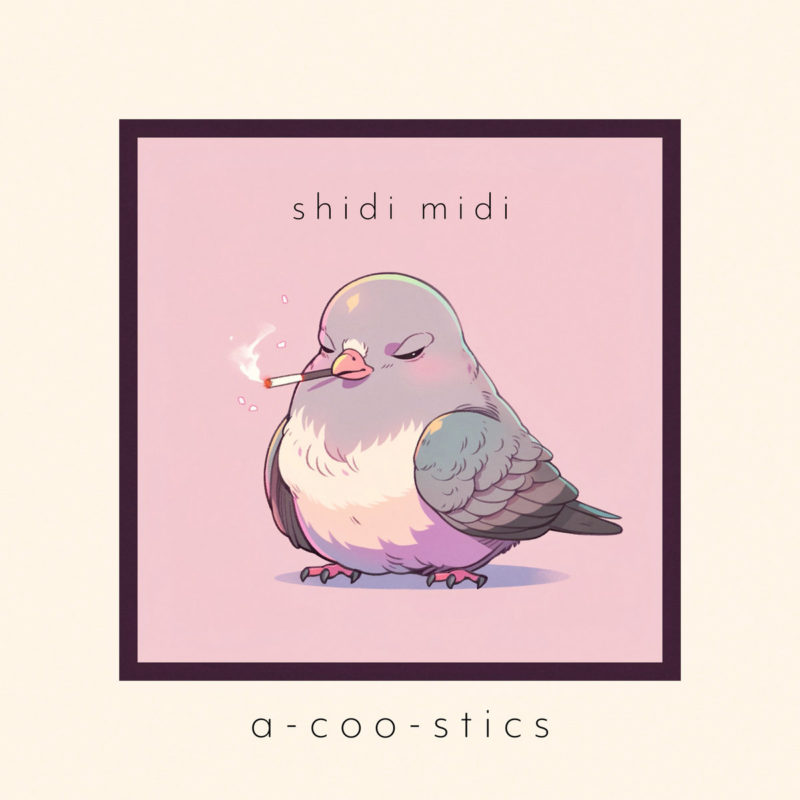
A handful of glimmering submissions from Chicago-based Shidi Midi.
I’ll readily admit that when hyperpop became ubiquitous in the mid-2010s, I was never quite able to fully grasp its appeal. Not that I couldn’t appreciate the intensity of its production, or even its plastic-obsessed aesthetic–but I think coming from a time and place where gabber kicks were the antithesis of cool, I just couldn’t quite stomach all of it as well as some of my friends. But I like where it’s gone, or at least what it left in its wake. I appreciate the ease with which the stylistic merging of dance music and video-game retrophilia has become commonplace; and I really like how many artists that might have been termed hyperpop five or ten years ago, are now just as easily embracing jungle and breakcore references over 150bpm+ gabber 4×4. It’s become embodying of exactly the kind of musical free-for-all that I’ve always sternly believed breeds real creativity.
Shidi Midi is one shining example of the class of artists working in that space. Their work seems as unencumbered by genre as it is proudly technicolor. I’ve selected a few good ones here — the first is the opener of their newest EP a-coo-stics; the second the closer of their album Birdhouse, released earlier this year; the last, an hilarious choice cut I discovered on their soundcloud that was an immediate winner in my book.
Sometime about 20,000 years ago, a wiry-haired and very hungry pack of descendants of the Miacis decided collectively that they should brave a plea for help from those strange smooth creatures with the strong rumps and weak shoulders. They’d been following these hairless beasts for some time, subsisting on what was left behind in or near piles of burning embers. But with an unexpected glut of healthy members having arrived in the spring, the pack needed more. The alphas of this particular pack were unique in that they were somehow capable of more than brute force; they knew how to demonstrate leadership of a more nuanced sort, the kind that centers strength derived from affection and protection, not only violence.
These canids were the first to tie themselves to the fate of humans. A few thousand years later, when men and women had stopped moving constantly, and built cities perfect for the proliferation of pest, small wildcats took the cue, and decided to set up shop too. Now we love these animals as family, and they love us.
Necessity and opportunity can breed sincere connection. It’s not always so different when two people find each other.
Hot Spoon, Cold Mango is a project from dutch-born artist Stephen Meeker, pursuing a genre he calls Motion Vision — a collage of modern classical, ambient, and post-rock. The project was born of the love between Meeker and his partner while indulging in Mango sorbet together using a spoon fresh out of the dishwasher. Despite these intimate beginnings, his latest album, Paws on Ears is lofty and conceptual; what Meeker terms as “easy listening for weary space travelers”.
The eighteen pieces on the record aren’t characterized by any single sound or effect. From the plasticine and putty-like woodwinds of “First Dance of Eight Paws”, to the amber-from-sap pianos of “Amongst the Roots of Trees”, to the fairy-buzz chimes of “Walk to Find Trees”. A disparate collection tied together by something ephemeral, but somehow also familiar.
Meeker describes his inspiration as rooted in his sense of his own existence. He explains that his music is an expression of his “profound lack of understanding of the world that surrounds [him]” and his desire to decipher our collective experience into something narrative. Paws on Ears does indeed strike a narrative chord, albeit an abstract one — not one that’s easily categorized. Maybe it’s that willingness to accept what he doesn’t know that gives the music its nearly-naive-but-surprisingly-complex quality. In any case, the feeling that resonates with me after a handful of listens through is simple the unconditionality of love possible between friends who need each other deeply. Symbiosis as devotion. Take that for what you will; I suspect Meeker wants the meaning to lie with the listener. Paws on Ears is out now for streaming universe-wide.
Hot Spoon, Cold Mango – “A Beckoning Plea of a Call For Bears” (sc)
Hot Spoon, Cold Mango – “A Cow Stands Guard Protecting Their Llamas” (sc)
(Expand)
This review was written in support of the artist’s promotional campaign.
As she stares into her laces, a bee buzzes and hums in her ear is that a tune she remembers? or is it one she should? Grampa used to ask her what she expected from music
whether she thought it would fulfill her now as she waits for her ride, she wonders if the color is enough to keep her going whether things will change for the better or
if the volume will continue to dim.
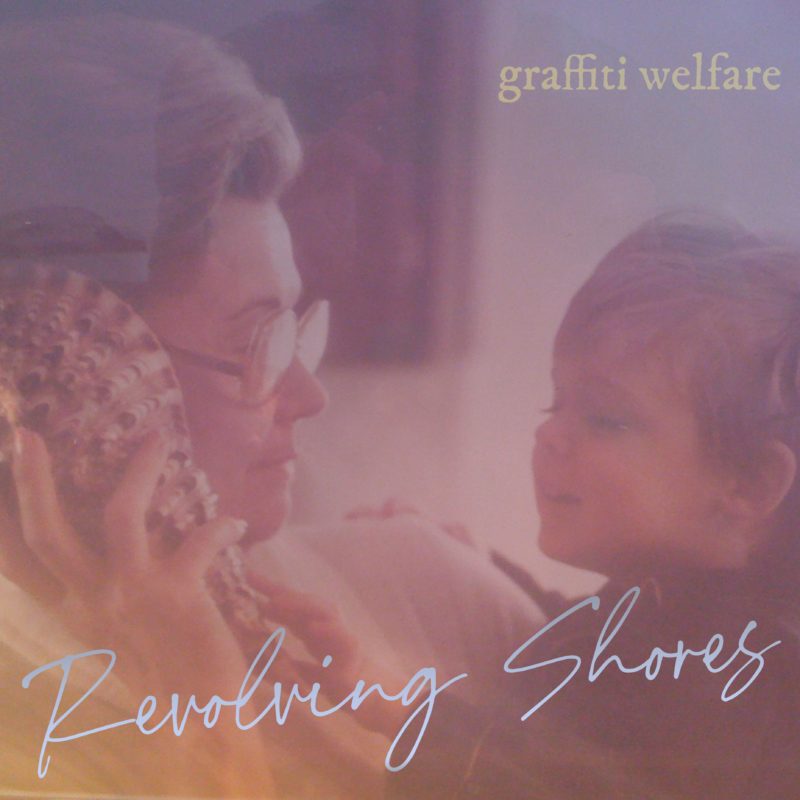
Graffiti Warfare is the nom de guerre of Denver’s George Lattimore. Revolving Shores is his second album under that name. It’s an outright embrace of nostalgia, but broader in emotional scope than the work of some of his contemporaries. Nostalgia indeed, but not just for stoned teenage angst and romance, also for sharp-eyed grandparents, kite flying, and plastic cutlery.
From the opening song, “To Be It,” which features spoken word recordings by mid-twentieth century perennialist, Alan Watts, the album feels like it must have been a really personal process for Lattimore. I was quick to want to characterize the record as intimate and wooly, and at many moments, it is that. It’s certainly interpretive; some of its references feel like they must be Lattimore’s alone, or akin to the kinds of inside jokes siblings keep–almost indecipherable, but nonetheless totally charming to outsiders. It’s a largely instrumental album, only making sparse use of vocals on most songs, with greater focus on synthesis, pillowy drums, and pedal work. But where some of Lattimore’s nostalgia-seeking colleagues may opt to dive headfirst into fuzz, tape warble, and binaural synth washes, most of Revolving Shores maintains a sense of earnest clearheadedness, at times even bordering on the piercing.
What might seem at first like a weedy and cozy lay in grass (see early standouts like “Just Follow” or “DejaBlue“) pretty quickly turns into more of a healthy not-quite-micro-dose on a brisk autumn beach. There’s plenty of flirting with melancholia, but also an apparent attempt to tackle concrete family anxieties, grief, and insomnia. I’ll admit I’m usually more of a weedy lay in the grass type, but the album is probably strongest when it embraces the colder and more frenetic — the collage slap bass of “Volume” or the stop/start-synthesized-shrill meets soft underbelly of the album’s closers “Missing the War” and “Seashell.”
Revolving Shores is Lattimore’s own personal moment on a cold bright day in wet sand, but most listeners will find themselves feeling welcome to join him.
The album is out now for streaming on all major outlets.
Graffiti Warfare – “Just Follow” (sc)
Graffiti Warfare – “Volume” (sc)
Graffiti Warfare – “Seashell” (sc)
(Expand)
This review was written in support of the artist’s promotional campaign.
Bombastic steppy heavy bass from Tokyo’s RIII (those are three i’s). “Kick” is the B2 off of RIII’s newest Vibesy EP, out now on Aranck Collective. The other track I’m including here is from Aranck Collective’s 2.0 compilation that was released this past June; “Howl” is dubbier, and reminds me of the kind of quasi-DMZ we used to push hard on Palms Out. Those were the days. Glad to know people are still pursuing this sound, and doing it well.